Life with a phone after years without
So AI is kind of a loophole to Internet usage. It seems efficient, but its power means the controls I set around it are never as strong as my abstinence was.


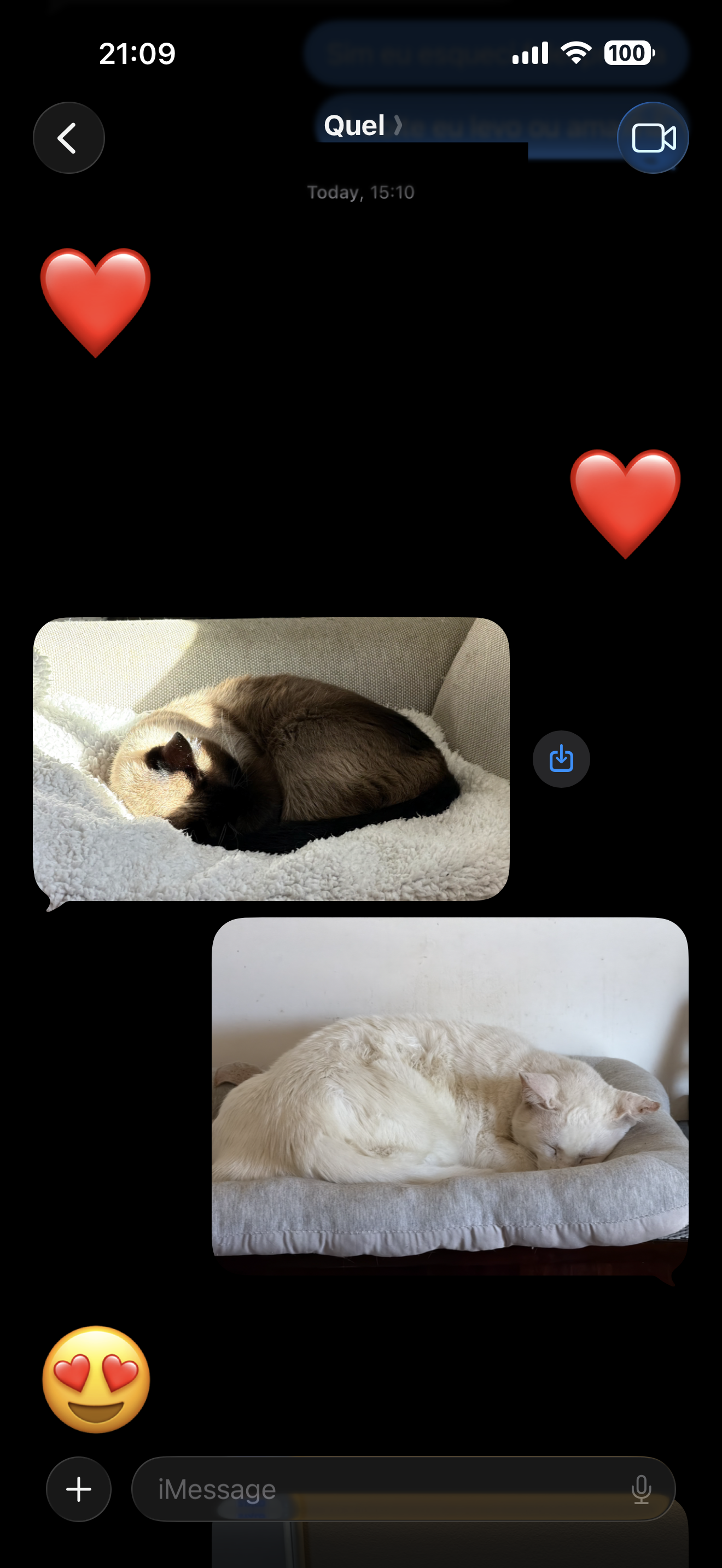
My wife Raquel woke up in another city today, where she’s spending a few days for a conference and to see some friends who flew over to meet her. She texted me good morning, and I replied with a video of our cat Chi saying hi to her.
She said she melted.
Not long ago, she wouldn’t have been able to text me at all — I had no phone. Later, with an Apple Watch, she’d at least have gotten an emoji back. But nobody melts over an emoji!
Nine months ago I bought a phone.. mostly because of AI. I’ve always thought that, with all its distractions, a phone’s downsides outweighed its benefits, but I figured superintelligent machines we can carry in our pockets certainly changed that equation.
Here’s how that’s going so far.
A minimalist phone
While I’m using a phone now, I’m definitely no phone maximalist. Here’s what my home screen looks like.
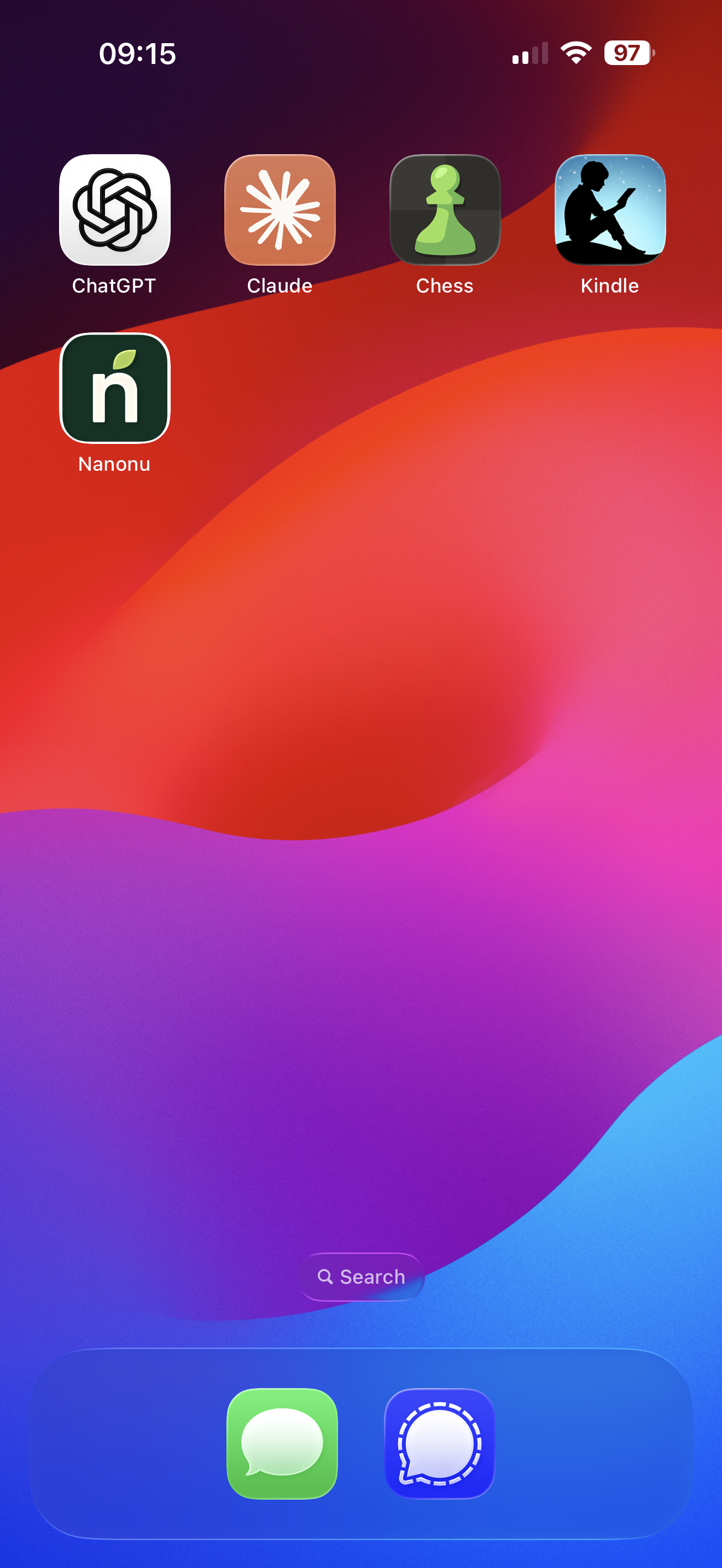
- AI with Claude and ChatGPT
- Kindle for reading books
- Chess for chess training
- Nanonu, the diet app I built
- iMessage for talking to Raquel
- Signal for talking to friends
There’s no social media or news, of course. And there’s not even a browser installed.
Yet even in this minimalist setup, my phone is full of attention traps ..
I’ve been more distractable
I still have to use a browser sometimes, say if I want to read a QR code (the iPhone just gives you an unhandled error otherwise, I guess Apple doesn’t have people without Safari in their QA). But since installing a browser is sometimes necessary — and always accessible — I’ve definitely caught myself installing it just to pass the time. Not often, but sometimes.
In any case, with AI, a browser for distraction is almost unnecessary.
Remember the power we got when we could finally Google from anywhere? Oh the possibilities! But soon we realized we weren’t Googling the critical things, but the trivial. I find the same is true for AI — which has replaced Google for many people, myself included.
I use it to look up the World Cup games, soccer teams and players. UFC fighters and their careers and injury recoveries. Magnus Carlsen’s kerfuffle with Chess and Take Take Take.
Honestly, this is stuff I’d never have access to without a phone or AI. Back when I said “I don’t use the Internet,” these are the types of things I meant I didn’t do.
But I do them now.
So AI is kind of a loophole to Internet usage. It seems efficient, but its power means the controls I set around it are never as strong as my abstinence was.
But it’s not all distractions, of course. AI, and particularly AI on the phone, has given me an unexpected but incredibly powerful answer to something I’ve been chasing for a long time now.
Efficiently learning languages.
Learning languages with AI
I like learning languages but, like most people, I have a hard time finding the time.
But I think I really figured out how to use AI to learn new languages. And it’s great. Here’s what I do:
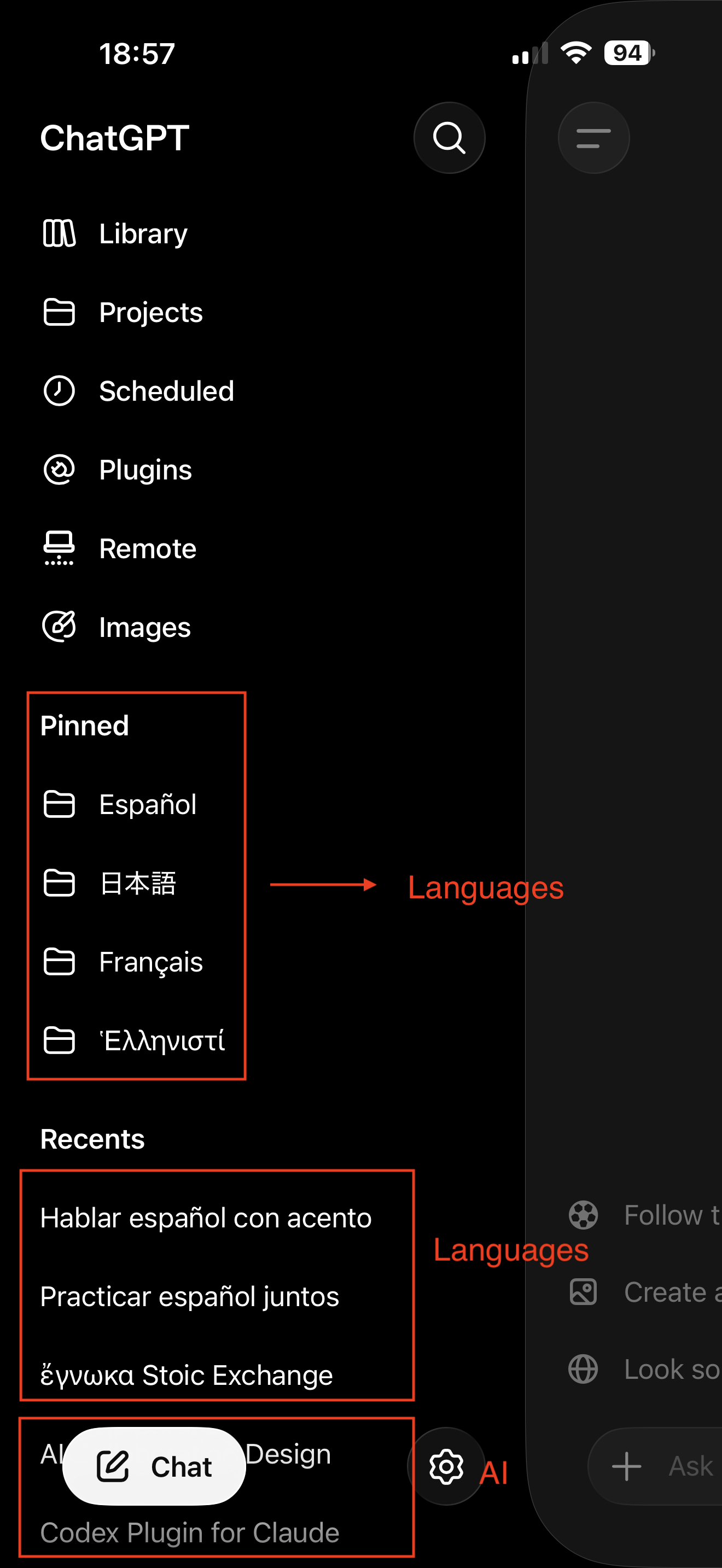
On ChatGPT I have “Projects,” and in each of them I built a curriculum for something I want to do, added as the project’s source. In Spanish, I’m mostly learning idioms from Madrid to incorporate into my vocabulary. In Japanese, learning vocabulary for playing Chrono Trigger in the original Japanese. And so on.
It has enough info in its memory to know that when we speak in Spanish (which is all the time now — I switched my AI language from English to Spanish to practice), it should work in those nudges.
And then, whenever I have a little spare time, I do a bit of language acquisition by learning, drilling, or testing.
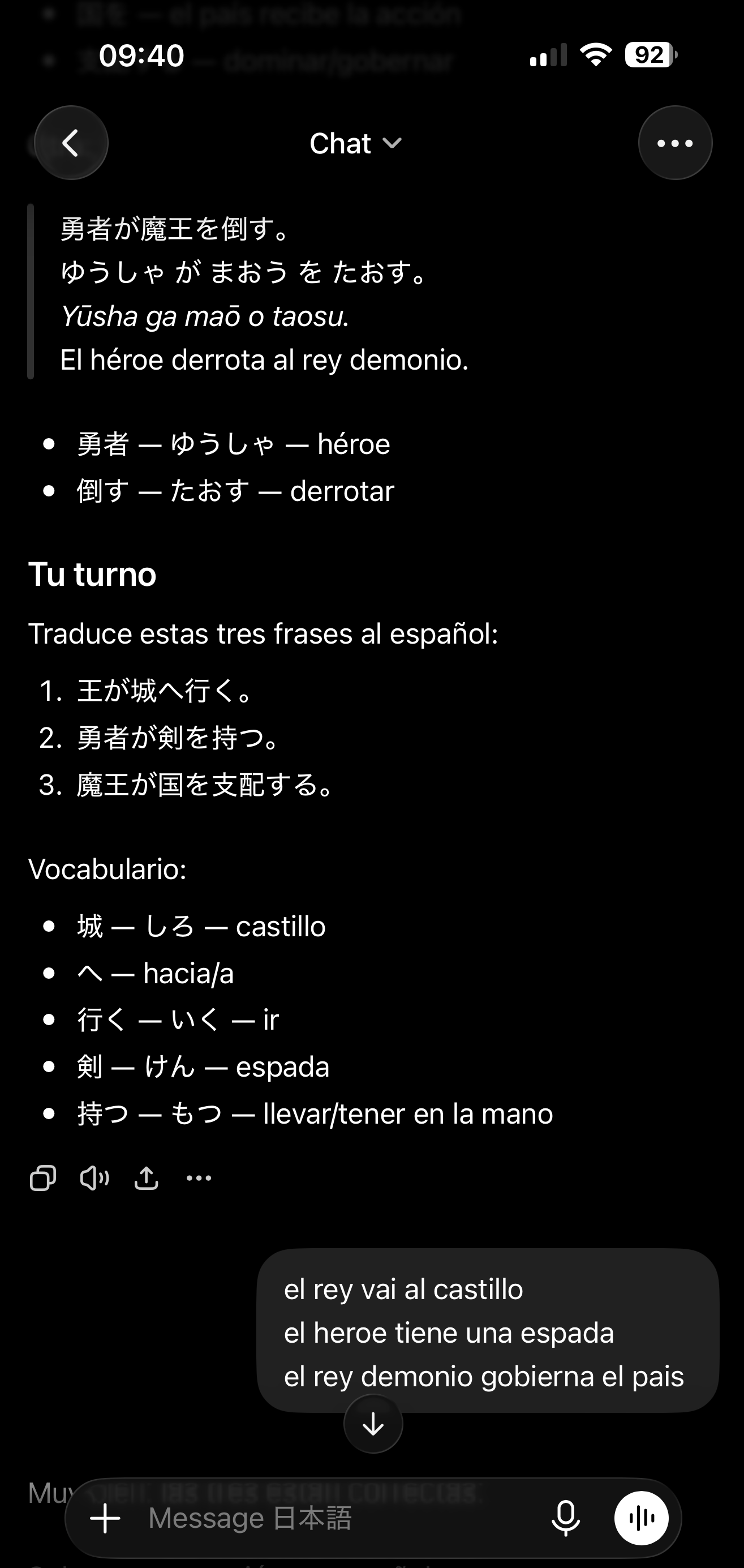
This AI language practice really helped me feel up to speed on Spanish before I traveled to Madrid a couple of months ago — unlike a couple of years earlier, when I had traveled without having practiced for a while.
And it’s also given me the opportunity to make progress, little by little, on prior interests such as Japanese, which I started learning as a teenager but eventually put aside due to other priorities.
If I had to stop using a phone today, language practice would probably be one of the things I’d miss most. It’s a distraction from real life, but I feel it’s really worth it when I do it.
But one activity I did a lot of at first and have now completely dropped is coding on the phone.
Absolutely no coding on the phone
At first I did a lot of coding with AI on my phone, and it felt really powerful. I even built my personal web pages and things like my X and LinkedIn AI integrations on the phone.
I’ve fully 180’d on that. I don’t use anything for coding on my phone anymore. The magnitude of the distraction was just immense.
Even if you’re using AI agents, coding isn’t “easy” — there’s a lot going on, and it takes real cognitive effort. And in my case, if it was accessible, it was virtually impossible to resist.
In fact, I’ve heard this a lot from employees at companies who, now having embraced agentic coding, struggle with the feeling that they’re wasting time whenever they’re not running coding agents in the background — anxiety over basic things like joining a meeting before they’ve kicked off an AI task to run.
Now imagine that pull to always be working — not just around meetings at work, but 24/7, for every activity, personal or professional. That’s the direction I felt coding on the phone was taking me, and I eventually decided the gained productivity wasn’t worth the lack of focus.
I may revisit this later, and perhaps there is a reasonable trade-off somewhere besides abstinence, but I feel really strongly right now that coding on your phone is just wrong and will only further alienate people from real life.
And I don’t want that alienation for me.
Oh but I almost forgot one thing that’s become nearly irreplaceable on my phone: my diet app!
Nanonu
Nanonu stands for “Nanonutrients,” a joke about the fact that we may not get enough micronutrients in our diet in a typical day unless we track them.
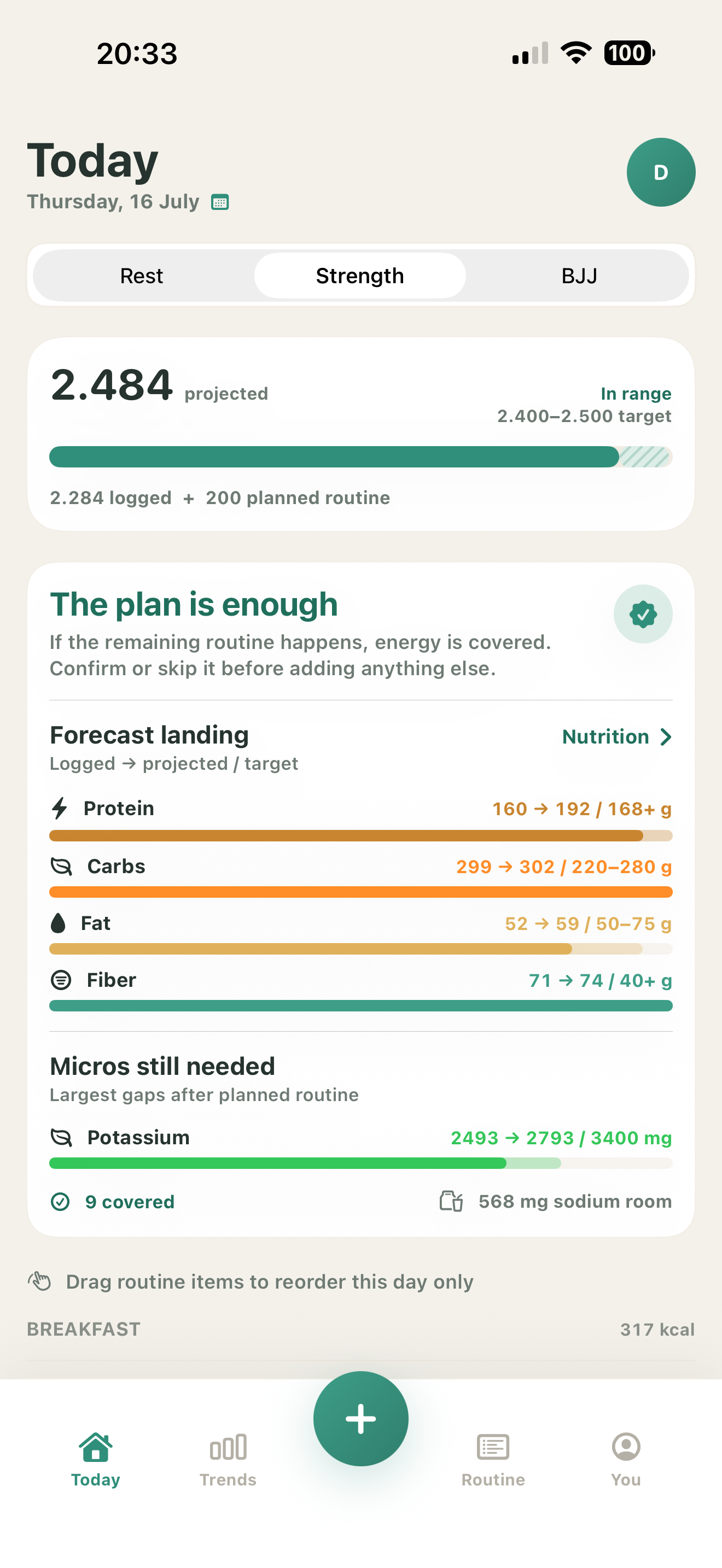
This is a real screenshot from my tracking today: I take pictures of my meals, the app detects the food using AI, and then tracks the macros and micronutrients based on my diet and activity level of the day.
I never tracked my diet before, and now I can’t imagine going back to not tracking it. I really think detailed analysis of what we’re eating is a core part of being healthy, and AI finally brings convenience to that.. but only if you have a phone.
I have stats on my average protein, calories, fats, and the nutrients I run low on. And I also have advice that’s personalized not only for me, but for my next meal: “You ate X for lunch, and it’s BJJ day, so take a supplement before training.”
The only way I can see being without it is if my diet were so consistent that I basically never deviated and didn’t need tracking. I can see that happening, but I imagine it’s very rare unless you’re on a diet that’s very controlled and filled with supplements.
I think there’s a category of apps that conveniently track our day-to-day in ways we can only do through AI. Just like watches and rings tracking our sleep, but for other things. That’s hard to replace.
And unless you’re a little robot, tracking beats, or at least augments, consistency.
It’s convenient, but not essential
In summary, I think there are 3 amazing value adds from my phone:
- Being directly accessible to my wife and exchanging cat pictures. This sounds rather trivial but is perhaps the most critical phone feature I have. Life is funny, isn’t it?
- Learning languages. I could do it on the computer, but it’s hard to find the time, and the phone form factor works great as an “on the run” practice tool.
- Diet tracking in detail. For someone with specific kcal needs per day depending on physical activity, specific protein goals while vegan, and micronutrients to track, it’s excellent.
On the other hand, there are some significant distraction opportunities from carrying a phone.
I’m still exposed to these distractions:
- AI is very tempting: Looking up sports or what-have-you — things that aren’t critical to my life and aren’t necessarily aligned with my values.
- Browsers are tempting and easy to install: Even though they’re uninstalled, they’re just an enable/disable away in Screen Time, and I definitely caught myself doing it.
Even then, some distractions are a HARD NO on my phone, including:
- WhatsApp: I’m generally inaccessible to other people on my phone aside from a handful of friends and family through Signal.
- Social Media: When I went back to X and LinkedIn I tried the apps for a bit and quickly realized the distraction toll was too high.
- Coding: While I’m sure it can make me even more productive, it will make me even more alienated from what’s happening around me. So, coding only on the computer for me, for the indefinite future.
And there you have it. I’m still not convinced that I’ll always have a phone on me, and I’m sure I’d adjust if I had to go without a phone tomorrow (particularly if I still had an Apple Watch).
I’d just have a worse diet and would not be learning other languages as quickly as I am now.
But importantly, there’d be fewer cat pictures, videos, and hearts melting between my wife and me.
So let’s keep the phone.
For now.